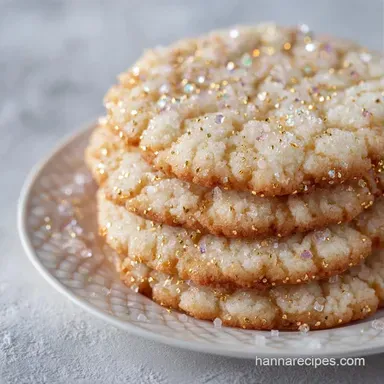
Crispy White Sugar Cookies: Old Fashioned Crunch
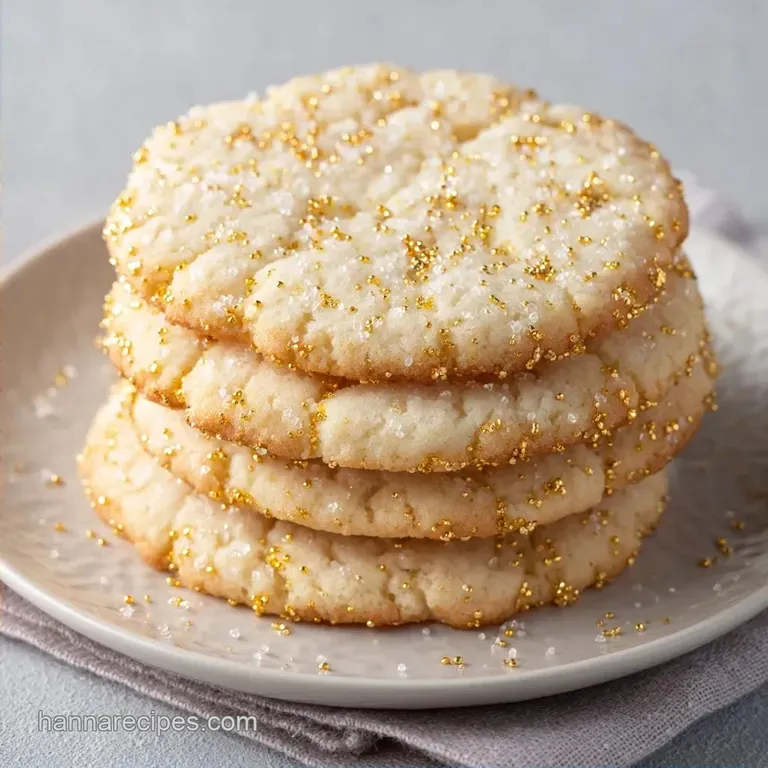
- Time: 15 min active + 1 hour chilling
- Flavor/Texture Hook: Buttery, vanilla forward with a pale gold snap
- Perfect for: Holiday cutouts, tea parties, or beginner bakers
Crispy White Sugar Cookies
That sound is everything. You know the one, where the cookie doesn't just break, it actually shatters into clean, jagged pieces. I remember the first time I realized that the secret to that specific snap wasn't the oven temp, but the granulated sugar.
Most people treat sugar as just a sweetener, but here, it's the structural hero. It creates a crystalline lattice that holds the cookie's shape and gives it that distinct, old school crunch.
If you've ever had a sugar cookie that felt more like a soft muffin, you likely had too much moisture or too much leavening. These are different. They're lean, clean, and focused on the pure taste of butter and vanilla.
We're aiming for a cookie that stays white in the center but develops a thin, toasted ring around the edge.
When you make these Crispy White Sugar Cookies, you're playing with a balance of fat and sugar. We don't use brown sugar because the molasses in it adds moisture and acidity, which leads to a chewy, bendy cookie. By sticking to pure white sugar, we keep the flavor bright and the texture rigid.
It's the difference between a soft pillow and a crisp wafer.
Why These Work
The magic here is all about controlling how the sugar melts and the fat behaves. When we cream the butter, we're not just mixing, we're trapping air that will later be stabilized by the flour.
Sugar Crystallization: White sugar doesn't hold onto water like brown sugar does. This allows the moisture to evaporate faster in the oven, leaving behind a crisp structure.
Fat Stabilization: Chilling the dough solidifies the butter. This means the cookie doesn't melt into a puddle the second it hits the heat, keeping your cutout shapes sharp.
Thickness Control: Rolling to 1/8 inch ensures the heat penetrates the center quickly. If they're too thick, the edges burn before the middle dries out, leaving you with a soft center.
Leavening Limit: We use a tiny bit of baking powder. Just enough to give it some lift, but not so much that it becomes cakey.
DIVTABLE_0
Quick Recipe Specs
Depending on how you like your treats, you might choose a different path. Some people want a 15 minute fix, while others want the classic, structured result.
| Feature | Fast Method | Classic Method (This Recipe) |
|---|---|---|
| Chill Time | None | 1 hour minimum |
| Texture | Softer, more spread | Rigid, sharp snap |
| Shape | Scoop and drop | Rolled and cut |
| Best For | Quick cravings | Decorated cutouts |
If you're in a rush, you might be tempted to skip the fridge, but trust me on this, the chill is where the texture is born. For those who prefer a different style of treat, you can always look into simple homemade cookies for a faster turnaround.
Essential Ingredient List
The beauty of this recipe is the simplicity. There are no fancy additives, just a few staples that do a lot of heavy lifting.
| Ingredient | Science Role | Pro Secret |
|---|---|---|
| Unsalted Butter | Provides structure and richness | Use European style for higher fat content |
| White Sugar | Creates the crisp "snap" | Roll in extra sugar for a glittery crust |
| All Purpose Flour | Builds the gluten framework | Spoon and level to avoid a dry cookie |
| Egg | Binds ingredients and adds lift | Must be room temp to avoid curdling butter |
For the Dough
- 1 cup (225g) unsalted butter, softened Why this? Provides the rich base and helps sugar cream
- 1 cup (200g) granulated white sugar Why this? Essential for the crisp, shatter like texture
- 1 large (50g) egg, room temperature Why this? Emulsifies fat and sugar for a smooth dough
- 2 tsp (10ml) pure vanilla extract Why this? Adds the classic aromatic warmth
- 2 1/2 cups (315g) all purpose flour Why this? Standard protein for a sturdy cutout cookie
- 1/2 tsp (3g) baking powder Why this? Minimal lift to prevent density
- 1/2 tsp (3g) salt Why this? Balances the sweetness
For the Finishing Touch
- 1/4 cup (50g) granulated white sugar Why this? Creates a crunchy, sparkling exterior
The Right Baking Tools
You don't need a professional kitchen, but a few specific tools make the process foolproof.
- Stand Mixer or Hand Mixer: To get that pale, fluffy creamed butter.
- Rolling Pin: A heavy one helps get that 1/8 inch thickness consistently.
- Cookie Cutters: Any shape you like, but stainless steel gives the cleanest edges.
- Parchment Paper: This is a must. Greasing a pan can lead to uneven bottoms.
- Wire Cooling Rack: Prevents the bottoms from steaming and becoming soft.
Chef's Note: If you don't have a rolling pin, a clean wine bottle works in a pinch. Just make sure it's smooth so the dough doesn't stick.
Step by step Method
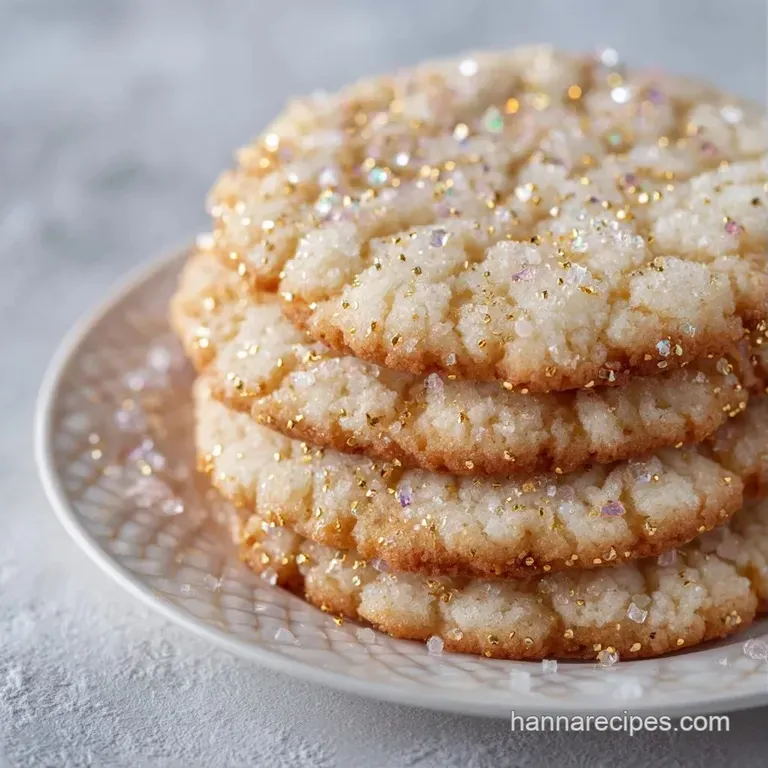
Let's get into it. Precision is key here, so don't eyeball the thickness or the timing.
- Cream the base. Combine the softened butter and 1 cup of sugar in a bowl. Use medium speed until the mixture looks pale and fluffy.
- Add liquids. Beat in the egg and vanilla extract. Mix until fully incorporated and smooth.
- Whisk dry ingredients. In a separate bowl, stir together the flour, baking powder, and salt.
- Combine. Gradually mix the flour mixture into the wet ingredients. Stir until a smooth dough forms. Stop as soon as the white streaks of flour disappear.
- Chill the dough. Wrap the dough tightly in plastic wrap. Refrigerate for at least 1 hour. This is where the flour hydrates and the butter firms up.
- Prep the oven. Preheat your oven to 350°F (175°C).
- Roll it out. On a lightly floured surface, roll the dough to exactly 1/8 inch thickness.
- Shape and coat. Use cutters to create shapes. Gently press the cutouts into the extra bowl of granulated sugar.
- Bake. Place on a parchment lined baking sheet. Bake for 8-10 minutes until the edges turn a pale gold color.
- Cool. Transfer to a wire rack immediately. Let them firm up for 5-10 minutes.
Solving Common Baking Issues
Even with a precise recipe, things can go sideways. Most cookie problems come down to temperature or measurement.
Why Your Cookies are Soft
If your Crispy White Sugar Cookies feel cakey, you might have over mixed the dough. Over mixing develops too much gluten, which traps air and creates a bread like texture instead of a snap. Also, check your flour measurement; too much flour can actually make them puff up like cakes.
Why They Spread
Spread usually happens because the butter was too warm or the dough didn't chill long enough. If the butter melts the moment it hits the oven, the sugar doesn't have time to set the structure, and the cookie flattens.
Rough Surfaces
A rough or cracked surface usually means the dough was too dry or the butter wasn't creamed enough. Ensure your butter is softened but not oily.
| Problem | Root Cause | Solution |
|---|---|---|
| Too Soft/Cakey | Over mixing or too much flour | Mix until just combined; use a scale |
| Excessive Spread | Butter too warm or skip chill | Chill dough for full 60 minutes |
| Burnt Edges | Oven too hot or too thick | Use oven thermometer; roll to 1/8 inch |
Quick Fix Checklist:
- ✓ Butter is softened but still holds a thumbprint.
- ✓ Flour was spooned and leveled, not packed.
- ✓ Dough was chilled for a full hour.
- ✓ Oven was fully preheated to 350°F.
- ✓ Cookies were removed at "pale gold," not dark brown.
Swaps And Flavor Twists
While the original is a classic, you can tweak these Crispy White Sugar Cookies to fit the mood. If you're planning a larger spread, these pair well with something richer, like a slice of Black Forest cake.
| Original Ingredient | Substitute | Why It Works |
|---|---|---|
| All Purpose Flour | Almond Flour (50/50 mix) | Adds nuttiness. Note: Results in a slightly softer snap |
| Vanilla Extract | Almond Extract | Gives a professional bakery, marzipan like taste |
| Unsalted Butter | Coconut Oil (solid) | dairy-free alternative. Note: Adds a subtle coconut hint |
| White Sugar | Coconut Sugar | Lower glycemic. Note: Changes color to brown and softens texture |
Citrus Zest
For a bright twist, add the zest of one lemon or orange to the creamed butter. The acidity cuts through the richness of the butter and makes the vanilla pop.
Holiday Spice
Add 1/2 tsp of cinnamon and a pinch of nutmeg to the flour mixture. This transforms them into an old-fashioned crunchy treat that feels like a winter morning.
Adjusting The Batch
Baking for a crowd or just for yourself? Here is how to handle the numbers.
Scaling Down (Half Batch) To make 18 cookies, halve all ingredients. Since you can't easily halve an egg, crack it into a bowl, beat it, and use 25g. Use a smaller baking sheet to keep the oven heat concentrated.
Scaling Up (Double Batch) When doubling to 72 cookies, don't double the baking powder exactly use about 1.5x the amount (3/4 tsp) to prevent them from puffing too much. Work in batches.
If you crowd the oven with too many sheets, the temperature drops, and the cookies will spread before they set.
Baking Adjustments If you're using a convection oven (fan on), drop the temperature to 325°F (160°C). The moving air cooks the edges faster, and the lower temp prevents them from browning too quickly.
Baking Truths
There are a few things people always say about sugar cookies that just aren't true.
Myth: You can skip the chill if the room is cold. Cold air isn't the same as a refrigerated environment. Chilling isn't just about temperature; it's about hydrating the flour and stabilizing the fats. Without the hour in the fridge, your cutouts will blur into blobs.
Myth: More sugar always means more crunch. Too much sugar can actually cause the cookie to collapse. Sugar liquefies in the oven. If the ratio of flour to sugar is off, the cookie will spread too thin and become brittle or burnt rather than crisp.
Keeping Cookies Fresh
Since these are designed to be crispy, humidity is your enemy.
Storage Guidelines Store your cookies in an airtight container at room temperature. They'll stay crisp for about 5-7 days. If you live in a humid area, put a small piece of parchment paper between layers to prevent them from sticking.
Freezing Tips You can freeze the baked cookies for up to 3 months. Freeze them in a single layer on a tray first, then toss them into a freezer bag. To eat, just leave them on the counter for 20 minutes.
Zero Waste If you have leftover dough, roll it into small balls and bake them as "drop cookies." They won't have the perfect cutout shape, but they'll have the same great snap. Also, don't toss the flour dust on your counter use it to dust your next batch of dough.
Best Drinks and Sides
These cookies have a clean sweetness that makes them a perfect canvas for other flavors.
The Classic Contrast A cold glass of whole milk is the gold standard. The creaminess of the milk balances the sharp snap of the sugar.
The Sophisticated Sip Try these with a strong Earl Grey tea or a dark roast coffee. The tannins in the tea and the bitterness of the coffee cut through the butter, making each bite taste fresh.
Dessert Platters If you're serving these at a party, arrange them with fresh raspberries and slices of green apple. The tartness of the fruit provides a great counterpoint to the vanilla heavy profile of the cookies.
Recipe FAQs
Do I really need to refrigerate the dough for an hour?
Yes, chill for at least 1 hour. This firms up the butter, preventing the cookies from spreading too thin and ensuring the edges stay crisp.
What happens if I roll the dough thicker than 1/8 inch?
The cookies will be soft rather than crispy. Maintaining a precise 1/8 inch thickness is essential for achieving that signature snap.
Is it true that baking at 400°F makes them crispier?
No, this is a common misconception. Baking at 350°F for 8 10 minutes allows the cookies to set properly without burning the sugar coating.
How to store these cookies to maintain their crunch?
Store them in an airtight container after they have cooled completely. This prevents humidity from softening the exterior sugar crust.
Why is creaming the butter and sugar necessary?
It incorporates air for a lighter texture. If you enjoyed mastering this aeration technique here, see how the same principle works in these quick cookies.
How to get the granulated sugar to stick to the dough?
Press the cutouts gently into a bowl of sugar. Do this immediately after using the cookie cutters and right before placing them on the baking sheet.
Why are my cookies turning brown too quickly?
Check that your oven is exactly 350°F. Remove the cookies as soon as the edges reach a pale gold color to avoid over browning.
Crispy White Sugar Cookies