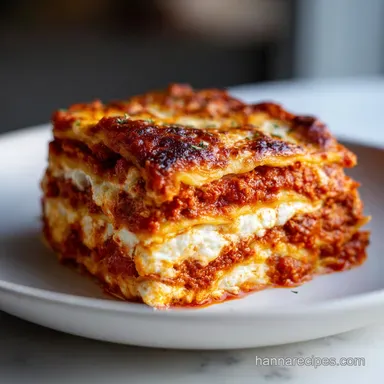
The Ultimate Homemade Lasagna: Hearty and Rich
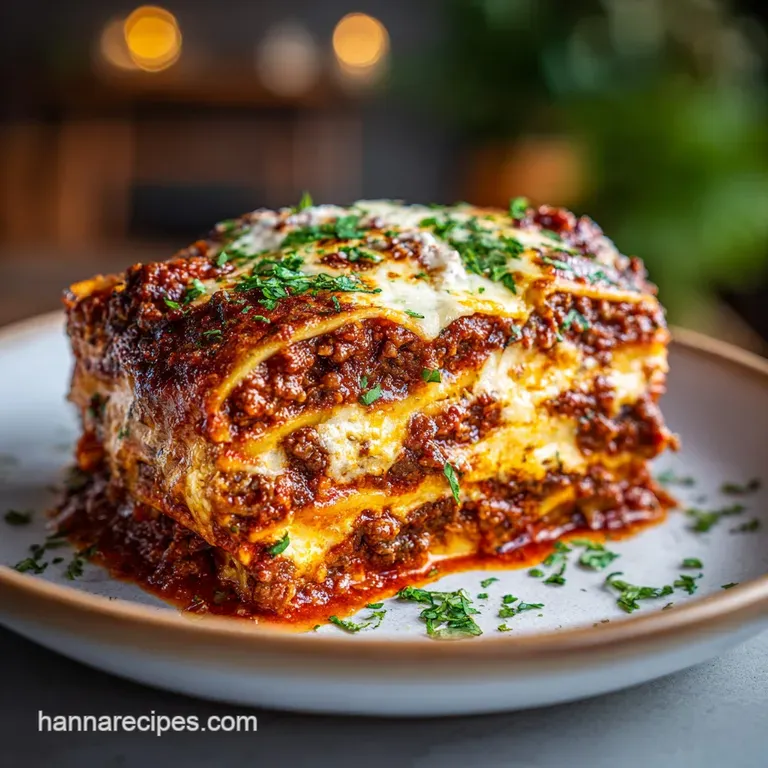
- Time:30 minutes active + 50 minutes baking = Total 95 minutes
- Flavor/Texture Hook: Velvety ricotta layers with a shatter crisp cheese crust
- Perfect for: Crowded Sunday tables and hearty family meal preps
- The Best Lasagna Recipe Secrets
- Why This Version Actually Works
- Meat and Cheese Deep Dive
- Ingredients & Substitutes
- Step-by-Step Cooking Flow
- Fixing Common Baking Mishaps
- Customizing Your Dinner Pan
- Adjusting Your Batch Size
- Common Kitchen Myths
- Preservation Secrets
- Plating For The Table
- Recipe FAQs
- 📝 Recipe Card
The Best Lasagna Recipe Secrets
That smell of browning Italian sausage and garlic hitting a hot pan is, for me, the official scent of a weekend. I remember one specific Sunday where I tried to rush the sauce, barely simmering it for ten minutes before layering. The result? A watery, sliding mess that looked more like a lasagna stew than a cake.
I almost gave up on homemade pasta bakes entirely that day.
But then I realized the secret isn't in the ingredients, it's in the patience. Once I started letting that meat sauce actually reduce, everything changed. The flavors concentrate, the texture thickens, and suddenly you have a structural masterpiece.
This is the best lasagna recipe because it focuses on that balance of moisture and stability.
You can expect a dish that feels like a warm hug. We're talking about layers that stay put, cheese that pulls in long strings, and a sauce that tastes like it's been bubbling for half a day, even though we've kept it accessible for a home kitchen. It's hearty, accessible, and honestly, the only way I make this now.
Why This Version Actually Works
I spent a lot of time wondering why some bakes are soggy and others are firm. It turns out it's all about how the liquids behave. Here is the lowdown on what's happening in your pan:
- The Ragu Reduction: Simmering the sauce for 30 minutes evaporates excess water, which prevents the noodles from becoming mushy. According to Serious Eats, browning meat deeply creates a concentrated base that carries the whole dish.
- Egg Protein Bond: Adding a beaten egg to the ricotta isn't for flavor, it's a binder. The egg sets during baking, turning the ricotta from a loose curd into a stable, velvety layer.
- Moisture Barrier: The thin layer of sauce on the bottom of the pan prevents the bottom noodles from sticking and burning.
- Fat Distribution: Using 80/20 beef ensures there's enough fat to keep the pasta moist without needing to add extra water or oil.
| Noodle Type | Prep Time | Texture | Best For |
|---|---|---|---|
| Traditional Boil | 15 minutes | Soft and classic | Traditionalists |
| No Boil Sheets | 0 minutes | Denser and firmer | Quick weeknights |
| Fresh Pasta | 5 minutes | Silky and tender | Special occasions |
Meat and Cheese Deep Dive
When you're making the best lasagna recipe, the quality of your fats determines the final taste. I always go for a mix of beef and sausage because the beef provides the base, but the sausage brings the fennel and spice that makes it feel authentic.
| Ingredient | Science Role | Pro Secret |
|---|---|---|
| 80/20 Ground Beef | Fat/Flavor Base | Don't drain all the fat; it keeps the noodles supple |
| Italian Sausage | Aromatic Depth | Remove casings for a more uniform meat crumble |
| Whole Milk Ricotta | Creamy Structure | Use full fat only; low-fat separates and becomes watery |
| Tomato Paste | Umami Thickener | Fry it for 2 minutes before adding crushed tomatoes |
Ingredients & Substitutes
Right then, let's get your shopping list together. Stick to these for the best results, but I've added some swaps if you're missing something.
For the Meat Sauce: 1 lb (450g) Ground Beef (80/20) Why this? Perfect fat ratio for moisture 1 lb (450g) Italian Sausage (mild or spicy) Why this? Adds depth and spice 1 medium (150g) Yellow Onion, diced 4 cloves (12g) Garlic, minced 28 oz
(794g) Crushed Tomatoes 6 oz (170g) Tomato Paste Why this? Thickens the ragu 1 tsp (4g) Granulated Sugar 1 tbsp (6g) Dried Oregano 1 tbsp (6g) Dried Basil 1 tsp (5g) Salt ½ tsp (3g) Black Pepper
For the Cheese Filling: 15 oz (425g) Whole Milk Ricotta Cheese Why this? Velvety texture 1 large (50g) Egg, lightly beaten ½ cup (50g) Grated Parmesan Cheese ¼ cup (10g) Fresh Parsley, chopped ½ tsp (3g) Salt
For Assembly: 12-15 sheets (340g) Lasagna Noodles 4 cups (450g) Shredded Mozzarella Cheese Fresh Basil leaves for garnish
| Original Ingredient | Substitute | Why It Works |
|---|---|---|
| Ricotta Cheese | Cottage Cheese (blended) | Similar protein profile. Note: Slightly grainier texture |
| Italian Sausage | Ground Pork + Fennel seeds | Mimics the flavor profile. Note: Lacks some pre mixed spices |
| Whole Milk Ricotta | Mascarpone | Much richer and creamier. Note: Heavier, less tangy |
| Parmesan | Pecorino Romano | Saltier and sharper. Note: Use 20% less salt in the filling |
Step-by-step Cooking Flow
Let's crack on with the assembly. I like to think of this in phases so you aren't rushing while the stove is hot.
Phase 1: Simmering the Ragu
- Brown the ground beef and Italian sausage in a Dutch oven over medium high heat until a deep mahogany brown. Note: Don't stir too often; let the crust form.
- Add diced onions and garlic to the meat and sauté until translucent.
- Stir in tomato paste, crushed tomatoes, sugar, and herbs.
- Simmer for 30 minutes until the sauce is thick and reduced. It should hold its shape on a spoon, not run like water.
Phase 2: Prepping the Creamy Filling
- In a mixing bowl, fold together the ricotta cheese, beaten egg, parmesan, and parsley until smooth and cohesive. This is where the best lasagna recipe gets its structure.
Phase 3: The Strategic Layering
- Spread ½ cup (120ml) of meat sauce on the bottom of a 9x13 inch baking dish. Note: This prevents the bottom noodles from sticking.
- Create the first layer by placing 3-4 noodles, spreading 1/3 of the ricotta mixture, topping with 1/3 of the meat sauce, and sprinkling with 1 cup (112g) of mozzarella.
- Repeat the layering process two more times.
- Finish the assembly with a final layer of noodles, the remaining meat sauce, and a heavy layer of mozzarella.
Phase 4: The Two Stage Bake
- Cover the dish tightly with aluminum foil and bake at 375°F (190°C) for 40 minutes.
- Remove the foil and bake for another 10 minutes until the cheese is golden and bubbling.
Fixing Common Baking Mishaps
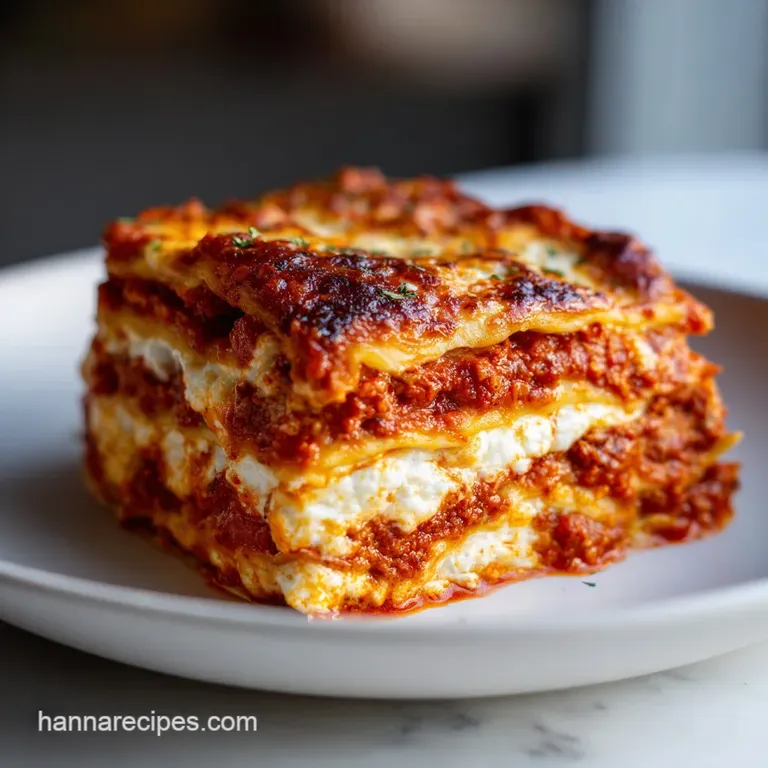
Even with the best lasagna recipe, things can go sideways. Usually, it's a moisture issue.
Why Your Lasagna Is Watery
This usually happens because the sauce wasn't reduced enough or the ricotta had too much whey. If you see a pool of liquid, you probably skipped the 30 minute simmer.
Rubbery Noodles
Overcooking the noodles before layering is the culprit here. If you're boiling them, take them out 2 minutes before the package says "al dente". They finish cooking in the oven.
Burnt Top and Cold Middle
This occurs when the oven is too hot or the layers are too thick. Using a foil cover for the first 40 minutes is non negotiable to ensure the heat reaches the center.
| Problem | Root Cause | Solution |
|---|---|---|
| Sliding Layers | Too much sauce/no egg | Increase simmer time; use the egg binder |
| Dry Noodles | Not enough sauce | Add 1/4 cup water to the ragu before baking |
| Tough Cheese | Overbaked | Remove from oven as soon as cheese browns |
Common Mistakes Checklist:
- ✓ Did I simmer the sauce for the full 30 minutes?
- ✓ Did I put sauce on the very bottom of the pan?
- ✓ Did I use full fat ricotta instead of part skim?
- ✓ Did I let the dish rest for 15 minutes before slicing?
- ✓ Is my foil seal tight so steam doesn't escape?
Customizing Your Dinner Pan
I love a classic, but sometimes you want to switch things up. This is where you can get creative with the best lasagna recipe.
The Quick Version: If you're in a rush, use no boil noodles. Just add an extra half cup of water to your meat sauce to give the noodles something to absorb.
The Veggie Swap: For a vegetarian lasagna recipe, swap the beef and sausage for a mix of sautéed spinach, mushrooms, and zucchini. Keep the ricotta and mozzarella exactly as they are for that classic comfort.
The Spice Route: If you like heat, add a teaspoon of red pepper flakes to the ragu and use "hot" Italian sausage. It cuts through the richness of the cheese brilliantly.
Something Different: If you want the flavor of this dish but in a bite-sized version, you can try making Lasagna Cups using wonton wrappers for a fun appetizer.
Adjusting Your Batch Size
Scaling a bake like this requires a bit of logic, especially with the pans.
Cutting it in Half: Use an 8x8 inch square pan. You'll need to reduce the baking time by about 20% because there's less mass, but keep the temperature the same. Beat one egg and use half of it to keep the ricotta binder correct.
Doubling the Batch: Don't try to put it all in one deep pan, or the middle will never cook. Use two 9x13 inch pans. When doubling, only increase the salt and dried herbs to 1.5x the original amount, as these flavors intensify when baked in bulk.
Baking Large Quantities: If you're doing 4x the recipe for a party, lower the oven temp to 350°F (175°C) and extend the bake time by 15-20 minutes. This prevents the edges from burning while the center catches up.
| Serving Size | Pan Size | Cook Time | Note |
|---|---|---|---|
| 6 Slices | 8x8 inch | 40 mins | Use 1/2 ingredients |
| 12 Slices | 9x13 inch | 50 mins | Standard recipe |
| 24 Slices | 2x 9x13 inch | 55 mins | Double the batch |
Common Kitchen Myths
There are a few things people tell you about the best lasagna recipe that just aren't true.
The "Searing Seals Juice" Myth: You'll hear that browning the meat "seals in the juices." It doesn't. Searing is actually about flavor, creating those brown, caramelized bits that make the sauce taste rich.
The "Strain the Ricotta" Myth: Some people say you must strain ricotta for hours. While it helps, using whole milk ricotta and adding an egg provides enough stability for a home cook without the hassle.
The "Pre boiling is Mandatory" Myth: No boil noodles are actually great if you have enough sauce. They absorb the flavors of the ragu more effectively than pre boiled noodles.
Preservation Secrets
Lasagna is one of those rare dishes that actually tastes better the next day. The flavors have time to mingle, and the structure firms up.
Fridge Storage: Store your slices in an airtight container for up to 4 days. I recommend letting the lasagna cool completely before putting it in the fridge to avoid condensation making the top soggy.
Freezer Friendly: You can freeze the best lasagna recipe in two ways. You can freeze the whole unbaked assembly (wrapped tightly in foil and plastic) for up to 3 months. Or, freeze individual cooked slices.
Reheating Tips: To keep the texture, avoid the microwave if you can. Heat a slice in a 325°F (160°C) oven covered with foil for 20 minutes. This keeps the cheese from getting rubbery.
Zero Waste Tips: If you have leftover ricotta mixture, stir it into some scrambled eggs the next morning. Any leftover meat sauce can be used as a base for a quick chili or a sloppy joe.
Plating For The Table
Presentation is everything when you're bringing a heavy dish to the table. You don't want it to look like a blob of cheese.
The Clean Slice
The biggest mistake is cutting into the lasagna the moment it leaves the oven. Let it rest for at least 15-20 minutes. This allows the cheese and sauce to set. Use a sharp serrated knife to saw through the layers rather than pressing down, which squashes the ricotta.
Pairing Ideas
Since this is a rich, heavy meal, you need something bright to balance it out. A crisp arugula salad with lemon vinaigrette is a classic. For something more colorful, a side of Mango Salsa provides a sweet, tangy contrast that cleanses the palate between bites.
Final Touches
Add a few torn leaves of fresh basil on top right before serving. The heat from the lasagna will release the basil's oils, adding a fresh aroma that cuts through the heavy cheese.
- 1. Sauce Consistency
- The ragu should be thick enough that a spoon leaves a clear trail in the pan.
- 2. Oven Temp
- Ensure your oven is a true 375°F (190°C), use a thermometer if you're unsure.
- 3. Resting Time
- Exactly 15 minutes of resting is the difference between a clean slice and a mess.
This is the best lasagna recipe because it doesn't rely on shortcuts that ruin the texture. By focusing on the reduction of the sauce and the stability of the cheese, you get a dinner that feels professional but tastes like home. Right then, get your apron on and let's get baking!
Recipe FAQs
What is the secret to a good lasagna?
Searing the meat until mahogany brown. This creates a deep flavor base before simmering the sauce for 30 minutes to reduce and thicken.
Can a diabetic have lasagna?
Yes, but in moderation. The crushed tomatoes and granulated sugar in the sauce contribute carbohydrates that can impact blood glucose levels.
What are common lasagna mistakes?
Under-saucing the layers. Skipping the initial meat sauce spread on the bottom or using too little sauce leads to dry noodles and sticking.
Can heart patients eat lasagna?
Consult a doctor first. This recipe contains ground beef, Italian sausage, and significant amounts of cheese, which are high in saturated fats.
How to keep the ricotta layers from sliding?
Fold together the ricotta, beaten egg, and parmesan until cohesive. If you enjoyed mastering this folding technique here, see how the same principle works in our Pumpkin Cheesecake.
Is it true that you should only use one type of meat for the sauce?
No, this is a common misconception. Combining ground beef and Italian sausage provides a more complex and savory flavor profile.
How to store leftover lasagna?
Cool completely and place in an airtight container. Refrigerate for up to 5 days; the flavors often improve after sitting overnight.
Best Lasagna Recipe with Italian Sausage